Anúncios
Do you know what 10-20 means, or why a dispatcher spells a plate as Tango, Romeo? Listening to police radio once meant owning a scanner. Today thousands of police, fire and rescue channels across the United States reach your phone, streamed by volunteers and, in many places, by the agencies themselves.
Before the apps and the step-by-step, test your ear. The Radio Code Check below has 10 quick questions on 10-codes, the phonetic alphabet and radio terms, one per screen, with the meaning explained after each answer.
Anúncios
Then come the three apps people use most, what each one costs, how to find your city’s channel, why some cities go quiet and what the law allows.
Start with Scanner Radio 👇

Radio Code Check
Do you understand police radio?
10 questions · 3 choices · score at the end · about 3 minutes · no sign-up
What is in the check
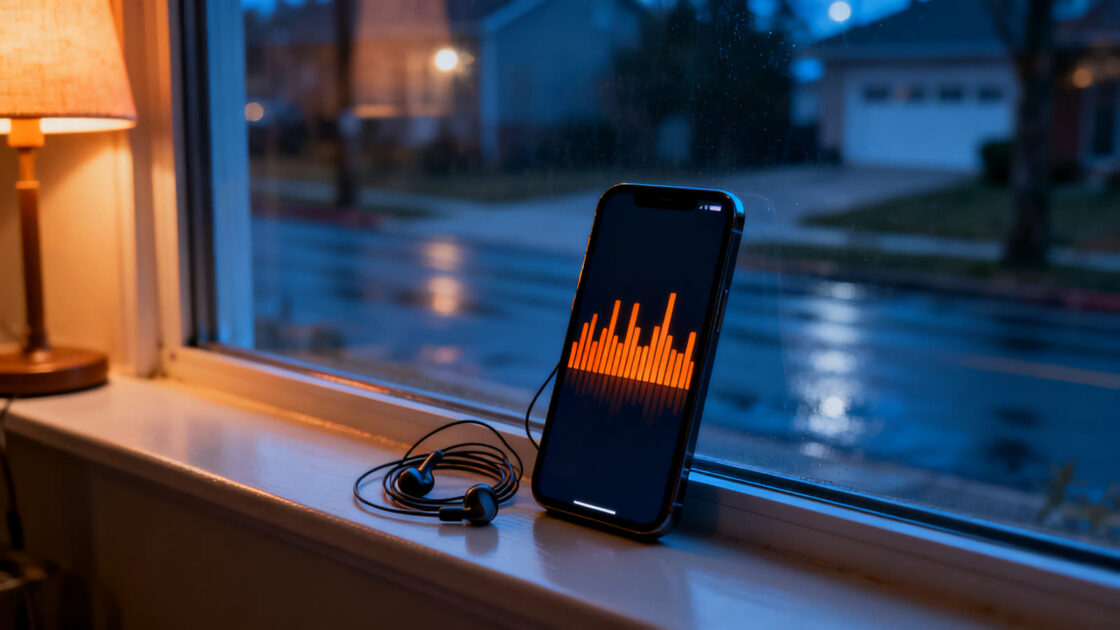
- The most common 10-codes: 10-4, 10-20, 10-9 and more
- The phonetic alphabet dispatchers use to spell plates and names
- Everyday radio terms: copy, over and plain speech
6 min read
📋 What you'll find here
- Read this first: the radio is not a call to action
- Scanner Radio: the most downloaded, for live channels
- Squawster: from the team behind Broadcastify
- CrimeRadar: a map instead of a channel list
- Which one fits which listener
- How to find your city's channel, step by step
Key Takeaways
- Scanner Radio, Squawster and CrimeRadar cost nothing to download, and all three show ads
- Scanner Radio and Squawster play live radio channels; CrimeRadar turns the audio into a map
- No app can open an encrypted channel, and some cities have nobody streaming
- If the emergency is yours, call 911, not an app
Read this first: the radio is not a call to action
A scanner stream tells you what is happening; it is not a reason to drive over. Stay away from an active scene and let officers and firefighters work. If the emergency is yours, call 911.
Using a broadcast to slip past officers or to set up a crime is illegal. Everything below assumes plain curiosity about your own area.
Scanner Radio: the most downloaded, for live channels
Scanner Radio, from GordonEdwards.net LLC, is the one to open when you want a live channel. It lists feeds near you and popular ones across the country, lets you star favorites and can alert you when a feed passes a listener threshold, often a sign that something big is going on.
On Google Play it has more than 10 million installs and a 4.8 rating from about 507,000 reviews. On the App Store it appears as Police Scanner Radio & Fire, rated 4.6 by about 540,000 people, so match the developer name when you search.
Installing it is free, with ads and in-app purchases; Pro is the upgrade that removes the ads. The audio itself comes from volunteers and agencies that stream their channels, not from the app.
Squawster: from the team behind Broadcastify
Squawster is made by RadioReference.com LLC, the company behind Broadcastify, the largest directory of public safety streams. It offers thousands of live police, fire, EMS, aviation, rail and weather feeds. You can browse by county, state or metro, search by name or jump to what is active near you.
It is free to browse and listen, with ads. Pro is US$4.99 a month on iOS and adds talkgroup scanning, playlists, cloud sync, archived recordings and no ads.
The app is young. On November 27 it had 152 reviews on Google Play at 4.4 and 384 ratings on the App Store at 4.6, so treat those scores as early signals.

CrimeRadar: a map instead of a channel list
If your question is simply what that siren was, CrimeRadar is the shortest path. It turns live dispatch audio into pins on a map, writes a short AI summary for each incident and lets you tap to hear the original call.
The developer is upfront on the App Store: content is not an official report or verified information. Treat each summary as a lead, and play the audio before you believe a detail.
It is free to download, with ads. Premium costs US$9.99 a month or US$79.99 a year on iOS. On Google Play it has more than 1 million installs and a 4.8 rating.

Which one fits which listener
Pick by the question you are asking, not by the star rating.
| You want to | Start with | Keep in mind |
|---|---|---|
| Open a live channel for your city | Scanner Radio | The free version has ads |
| Browse feeds by county | Squawster | Few ratings so far |
| Know what that siren was about | CrimeRadar | AI summaries can be wrong |
How to find your city's channel, step by step
Most people find their channel in under two minutes. The path is about the same in Scanner Radio and Squawster:
- Allow location, or search by state and then by county
- Look for the police or sheriff dispatch feed; fire and EMS usually have feeds of their own
- Check the status: a feed marked offline has no audio right now
- Star the feed so it is one tap away next time
- If your city is not listed, try the county sheriff, the fire department or a neighboring county
Why some cities go quiet
Don't be surprised if your own town sounds empty. More departments are encrypting their radio, and an encrypted channel cannot be opened by any app. The City of Fairfax, Virginia, announced that from July 13, 2026 its police dispatch channel would no longer be on the apps and online streams for that reason.
Silence can also mean nobody streams your area, or the volunteer's feed is offline for the night. Fire, rescue and neighboring-county channels often stay open when police radio does not.
What the law allows
In the United States, listening to public safety radio is generally allowed. The vehicle is where the law gets specific: some states, such as New York and Florida, restrict police-band radios in cars, with exceptions such as licensed amateur radio operators. Look up your state before you listen on the road.
What you do with the audio matters too. Using it to commit a crime or to evade officers is illegal, and a call can carry a name or an address, so keep personal details to yourself.
What you pay and where the ads show up
All three apps cost nothing to download, and all three show ads. Each also sells an upgrade. Prices below were read on the U.S. App Store on November 27, 2026; Google Play can differ.
If an offer opens with an introductory price, find the date the full charge starts before you confirm, and set a reminder.
- Scanner Radio: Pro removes the ads; several plans, check the price in your store
- Squawster: Pro is US$4.99 a month
- CrimeRadar: Premium is US$9.99 a month or US$79.99 a year
The short version
For a live channel, open Scanner Radio, the most downloaded of the three. Squawster is worth a look if you like to browse by county, and CrimeRadar gives the quickest answer about a siren, as long as you treat its summaries as leads.
This guide is informative and independent. Ratings, downloads and prices were read on Google Play and the U.S. App Store on November 27, 2026. We have no connection with the developers, with Broadcastify or with any police agency, and we are not responsible for how the apps work, for the accuracy of what you hear or read, or for changes in price.
Keep reading 👇
Satellite image apps: see any place from above ›
Car diagnostic apps: read the warning light on your phone ›
Identify old coins with your phone ›
FAQ
Do I need a real scanner?
No. The audio comes over the internet, so a phone and a connection are all it takes.
Can I hear a channel from another state?
Yes. You can pick a feed anywhere in the country, as long as someone is streaming it.
Why is my city's channel silent?
The department may have encrypted it, nobody may stream it, or the feed is offline. No app can open an encrypted channel, but fire and rescue feeds may still play.
Do 10-codes mean the same everywhere?
No. Common ones like 10-4 are widely shared, but each agency can keep its own list, and many now use plain speech instead.
Will these apps run on my phone?
If it is an Android phone or an iPhone, yes: all three are on Google Play and the App Store.
Can I share the audio I hear?
Better not. A call can carry a name or an address, and reposting it can put the people involved at risk.